
Georgetown County Most Wanted Status
Georgetown County has no public most wanted page. The Sheriff's Office posts no wanted list. There is no searchable warrant database, and no feature like Warrant Wednesday. No reward amount is published either. So a name in a news story proves nothing about a current warrant.
What does exist is the GCSO Warrants Unit. Its Patrol information says the unit manages and serves warrants countywide. It also tracks the people named in them. The public contact route is the sheriff's main number. Think of it as a verification service, not a browsable roster. That beats piecing things together from a dated article every time.
GCSO's Patrol information is the official source that names the Warrants Unit and its public contact route.
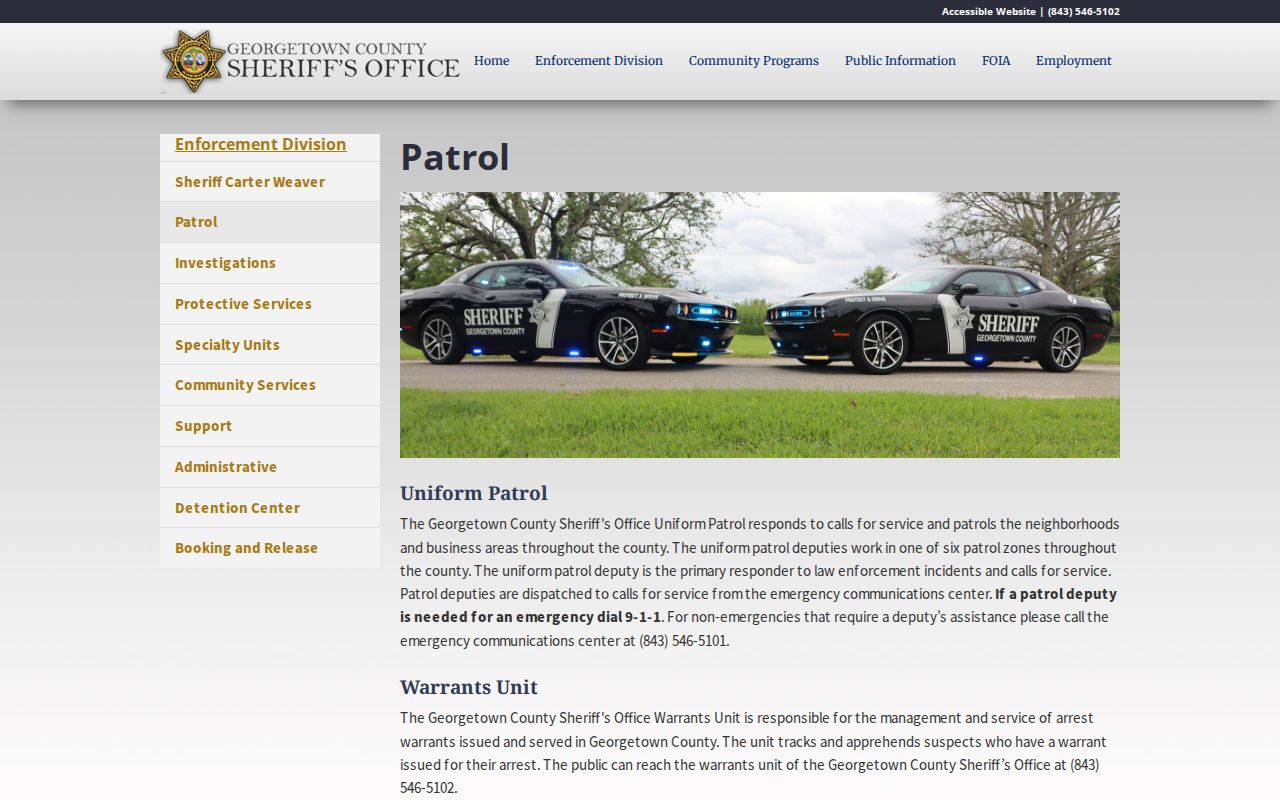
The Patrol material supports a direct inquiry to the right unit. What it does not do is publish names or photos. It offers no warrant details and no live status field for browsing.
Named announcements do surface sometimes. They appear in the sheriff's dated News Archive. Each release reflects one moment in time. They are not an ongoing wanted list. They cannot tell you whether a warrant is still active today.
What Georgetown Officials Can Confirm
Different records answer different questions. A public case file can be helpful without confirming a live warrant. A booking card, meanwhile, shows an intake or release event and nothing about a warrant's current status. Keeping each source in its lane prevents bad conclusions.
| Official source or record type | What it can help confirm | What it cannot settle |
|---|---|---|
| GCSO Warrants Unit | The proper official route for a current Georgetown County warrant inquiry and service-related question. | A public, self-service list of every person with a warrant, because no such GCSO list was verified. |
| Georgetown Public Index | A public court case, case events, and disposition information when the record is available. | Whether a warrant is currently active. Court timing, court type, and warrant status can differ. |
| GCSO News Archive | That GCSO made a particular dated announcement about an investigation, suspect, arrest, or warrant matter. | An ongoing status, a complete county list, or a current location. |
| GCDC Booking and Release | That a person was booked or released in the county detention system when an official result appears. | That a warrant remains active, that the case is finished, or that a person is guilty. |
Names repeat. Some court records carry access limits. A case file can also lag behind what an agency has actually done. Bring enough identifying detail for staff to find the right matter, then let the responsible office make the call.
The public record often uses similar words for different stages. An announcement may say a warrant was sought or served. A docket shows a court event. A detention record shows someone entered or left GCDC. None of the three replaces a current answer from the unit that serves Georgetown County warrants.
That boundary also guards against false matches. A booking card may share a name with the person you asked about. An old case can stay visible long after its posture changed. Staff, the court, or counsel can match the right identifying details to the right official record.
Check Georgetown County Warrants
No online Georgetown County warrant search exists. None can stand in for official confirmation. The lawful route is simple. Contact GCSO, use the court record to understand a public case, and get legal or court direction if the matter involves you personally. Never send a third party to confront someone to test a warrant. Never try to dodge service either.
- Call the GCSO main public number, 843-546-5102, and ask for the Warrants Unit or the official route for the question. Provide only the identifying details staff request.
- For a public court matter, search the Georgetown Public Index. Review the case caption, charge, events, and disposition fields carefully, because a public docket is not a real-time warrant check.
- If the matter concerns the caller or requires a response, contact a lawyer or the court to resolve it lawfully. An attorney can address the specific court and agency process that applies.
- Use 911 for an emergency or crime in progress. Do not approach, follow, confront, transport, or attempt to locate a person based on a name or old announcement.
The court route matters most once a case number exists. The Clerk of Court sits at 401 Cleland Street in Georgetown. The public office number is 843-545-3215. Court copies and sealed-file questions go to the Clerk. Current warrant confirmation still goes to GCSO.
Start with the agency even if a name shows up in a court search. The Judicial Branch index is a discovery tool for public cases. Its Georgetown entry can require a live browser session. It can display a caption, charge, case event, or disposition. It cannot say whether service is pending. It also cannot tell whether an agency record changed after the docket last updated.
Anyone asking about their own matter should skip the news reports, tips, and family searches. A lawyer can handle the applicable court, pending paperwork, and a lawful response. For a general public-safety concern, share facts with GCSO. Let law enforcement decide on service.
Report Georgetown Warrant Tips Safely
A bystander with information can pass it to GCSO. No investigative role is needed. The county's documented tip option is Text A Tip. It handles crime tips, not emergencies. GCSO describes it as anonymous. No local reward amount has been published, so do not assume or promise one.
GCSO Text A Tip describes the county's text and web reporting options.
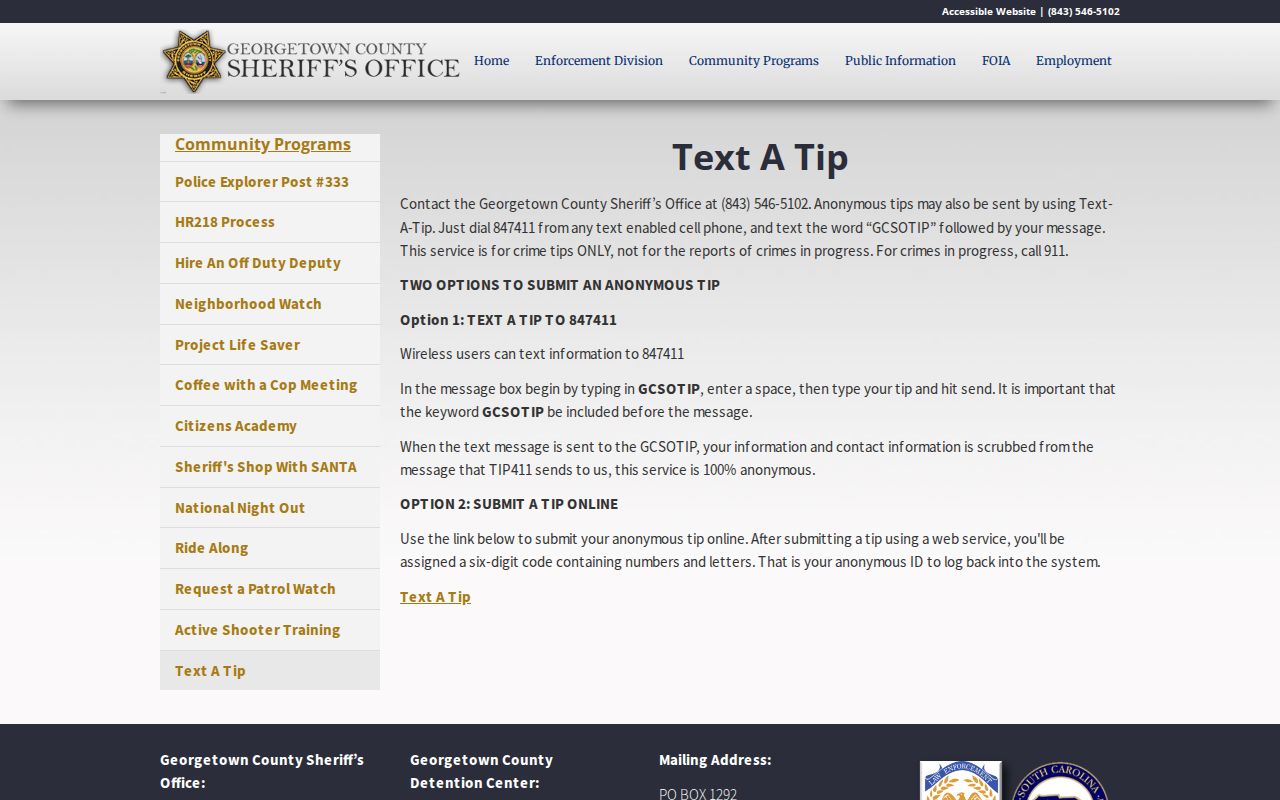
The tip service strips contact details from texts and assigns an anonymous identifier to online submissions. Send facts that might help law enforcement. Then let law enforcement evaluate and act.
Georgetown Sheriff Apps and Alerts
GCSO offers several digital tools. Each one does a single job. The Georgetown Co SC Sheriff Citizen Observer app gathers agency news and social content in one place, and it includes an anonymous-tip option. It will not work as an inmate lookup. It also lacks booking photos, booking dates, release dates, and any warrant database. A separate tool, the OffenderWatch Safe Virtual Neighborhood application, handles registry notifications only. Ask it nothing about jail or warrants.
For county booking and release records, use the GCDC web interface. That is the official source. Check it after a booking to see who was booked, when, and by which agency. When you need an agency announcement, the News Archive and the Public Information Office provide context, though neither replaces the record itself.
The split is easy to remember. Send tips through Text A Tip or the Citizen Observer app. Turn to GCDC for detention records. Use OffenderWatch strictly for its registry alerts. Stretching a single-purpose tool into a warrant search or general person lookup will only mislead you.
GCSO also maintains a Facebook presence. A social post can point you toward an announcement, but posts get edited, buried, or overtaken by events. The dated News Archive holds steadier historical context, and the Warrants Unit answers active-status questions directly. GCSO's Public Information Office serves as the agency's official public contact route.
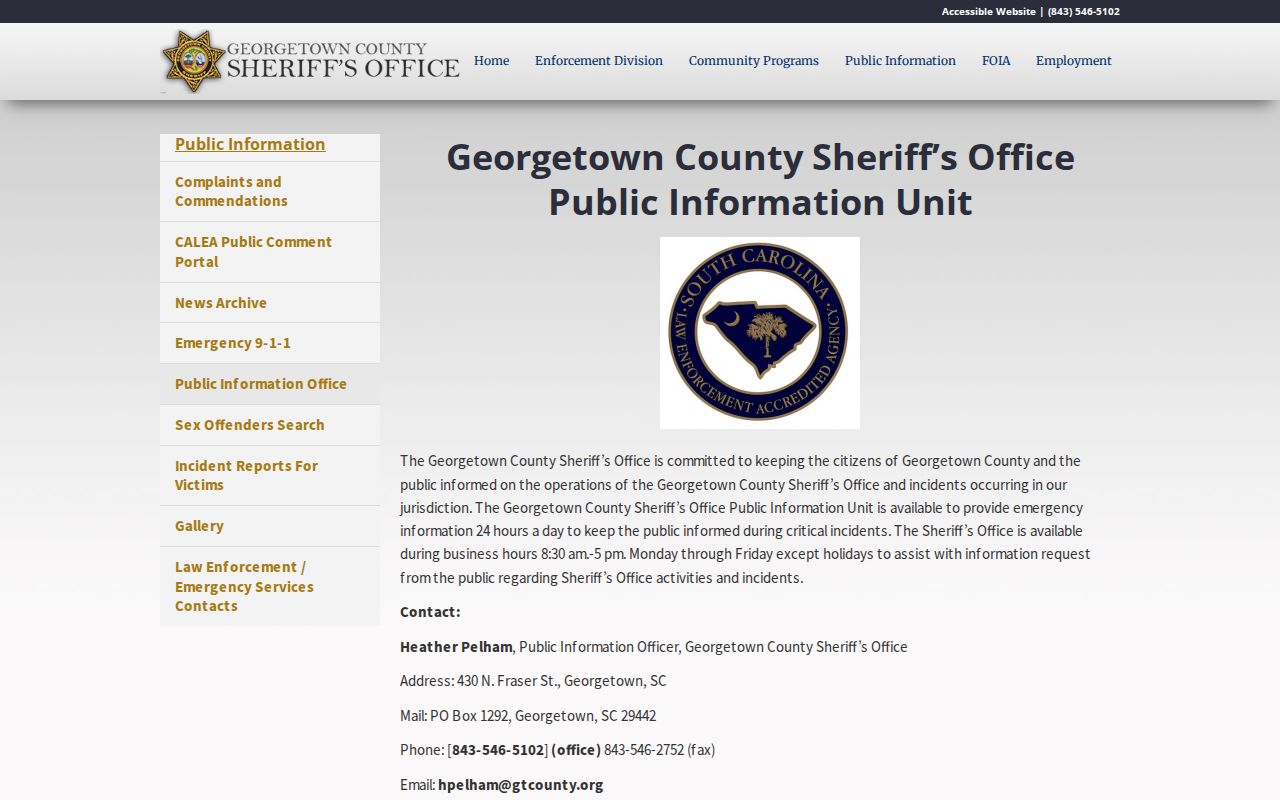
Public-information material can help you understand an agency announcement. It cannot turn an app, a news release, or a social post into a live list of wanted people.
After a Georgetown County Capture
Once GCSO confirms a person has entered county custody, the record shifts. Search the official GCDC Booking and Release interface by name, booking date, or release date. Results may include identifying fields, booking time, arresting agency, charges as booked, bond when posted, and release time. Booking photographs stay with the official source. They do not appear here.
Fresh records often have gaps. GCDC notes that charges post only after the arresting agency serves warrants, and bond posts only once Bond Court paperwork reaches the booking officer. Recheck the official record after processing rather than filling gaps with guesswork or news accounts.
Need an official copy or a historic booking record? Use the GCSO FOIA route with the person's name and an approximate arrest date. For what happened after booking, go back to the Georgetown Public Index and the Clerk of Court.
Custody also moves a record to a new home. GCDC covers local booking and release, while someone who leaves county custody may have been released, transferred, or absorbed into another system. A later state-prison sentence shows up in the South Carolina Department of Corrections locator. The court record remains the place to examine how the case ended.